
| The View from My Kayak |
|
| Written by Kim Gundler |
| Wednesday, 09 April 2014 07:21 |
|
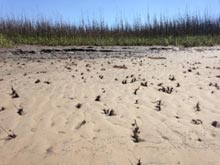
You've certainly seen them (or evidence of them). Little tubes sticking out of the sand; a miniature forest of bristling chimneys near the low tide line; a lumpy pile of sand low on the beach. What makes these interesting features? Our little tubular friends, the worms. Here is a guide to becoming a worm expert that you can use to impress your friends and family on your next trip to the beach or sandbar . . . Feature: Little tubes sticking about an inch out of the sand. The little tubes are made of sand grains and worm spit, and are there to protect its burrow from filling up with sand as the tides rush past. This worm can reach the impressive length of 2 feet, but what it eats is still a mystery. Feature: Bristly tube the size of your little finger sticking out of the sand. This worm is not content with a plain tube - it gathers material from the water column and "decorates" its tube with collections of spartina grass bits, live oak leaves, and other material it finds floating by. This creates the "bristly" appearance, and acts as the substrate for a garden of sorts, where algae and single-celled plants and animals attach. The next time you see one of these bristly tubes, gently turn the end up towards you, you will see that under the crook-neck top, there is a fairly large opening. The decorator worm uses this orifice to harvest the residents of its garden at feeding time. Feature: Lumpy pile of sand low on beach (looks like small mound of feces made of sand) This worm's feeding strategy works kind of like a juicer - put everything in, nutrients are extracted and the undigestables are expelled from the other end. They actually eat the sand as they burrow through it horizontally, causing a small depression to occur where the head is; after the nutrients are separated out, the tell-tail pile of sand occurs at the other end of the tunnel.
Seashore Animals of the Southeast, by Edward E. Ruppert and Richard S. Fox (University of South Carolina Press, 1988) Kim Gundler is co-owner/operator of Beaufort Kayak Tours along with her husband David. They lead interpretive kayak tours on the waters of Beaufort County. www.beaufortkayaktours.com |
 Marine Worms