
| Mayor Billy's Master Plan |
|
| Written by Mark Shaffer |
| Tuesday, 17 January 2012 14:44 |
|
Beaufort Mayor Billy Keyserling says he has the best job in the world. Being mayor of his hometown beats all, says the man locals refer to simply as Mayor Billy. It’s a first-name-basis kind of a job, one he has imbued with openness, enthusiasm and a large measure of communication. The Lowcountry Weekly editorial staff recently sat down with Hizzoner for a candid conversation about the year just ended and what lies in store for the year ahead. Among the broad list of topics some details remain guarded. The mayor hinted at efforts he’s exploring to strengthen local economic diversification and workforce development. And while it’s too soon to talk specifics, he says he’s ready to “make a couple of long passes” in 2012. He’ll also have to make a decision on whether he wants to keep the best job in the world for another term.
Lowcountry Weekly: 2011 was a milestone year for Beaufort, the tri-centennial year. Other than that
Billy Keyserling: During 2011 a lot of the thinking that a number of people have been doing about the past began to really crystallize in terms of a future which was based on the foundation of the past – how we lived physically in Beaufort, the importance of the military, which we tend to overlook. There was the desire by many to see if we can make some of our traditional industries like farming and fishing relevant again. Over three years ago we framed a comprehensive plan, and based on what we learned, I think we filled in a lot of the blanks and the product is the civic master plan – a long-term plan to essentially double the size of the city within our own footprint. What’s really exciting is that real estate demographics have sort of aligned with what Beaufort was and what Beaufort can be again. It’s evident in the revitalization of the old City Hall to become a market and the ongoing transformation of Carteret Street. Down the street, the university’s finally getting a focus on how to grow that campus by taking a narrow niche that they could cut out so it wouldn’t compete with, but complement, the south campus. By March, some 90 individuals or families will have contributed partial four-year scholarships to help create this art college.
BK: This is going to be one step at a time. It’s showing that 16 students can live responsibly in a dormitory. We all want to change things, but some of us don’t want that change happening in our own backyard. Well, we’ve got 5,000 backyards in Beaufort. If no one’s willing to accept a little change in their backyard, then nothing’s going to happen and we’re going to die. We’ve got to grow. Development has to be incremental and you have to convince people that the goal is to add something to Beaufort, not take something away.
LW: If this plan works, what does its long-term success mean for Beaufort?
BK: Our goal is to be environmentally, culturally and fiscally sustainable. We will always be a retirement community of sorts. If you look at the rankings of retirement communities, almost all of them at the top have universities, and that’s getting more popular because of continuing education, particularly programs like USCB’s [Osher Lifelong Learning Institute].
LW: Which is apparently the most successful OLLI program in the nation.
BK: Right. So, we know it attracts. It also creates a venue for bringing an even higher level of art or audiences for art forms that have struggled by having this market of younger people and their professors and families. It’s not just the students who will live here and consume here, it’s the events that will be held here, it’s the families visiting, it’s the parents who visit and decide to buy a retirement home. The [potential] for this campus is huge.
BK: We’re the perfect venue for this, and it’s the perfect kind of visitor activity we’d want. They’re going to come see and soak it up and then go home and talk about it. There’s no better marketing.
LW: The economy has been a dominant issue during your first term. Are we beginning to see signs of recovery on the local level?
BK: I think we’re beginning to see small signs of recovery. I don’t think we’re going to see big signs.
LW: 2011 also seemed to be a time of great civic dialogue – some of it heated at times, but nonetheless the channels of communication were open and buzzing.
LW: With all this communication going on, what sort of feedback do you get? Do people feel their voices are being heard? For instance, a lot of people turned out to voice their outrage at SCE&G during the tree-trimming debacle. Has anything come of that?
BK: I think they know we’re listening. As a result of that series of meetings we now have a pilot Since that tense time when everyone was shocked, including the trees, the Tree Commission has surveyed the city and come up with some areas where we’re going to try to figure out how to incrementally burying the lines. I think the City Council listens acutely. I’m such a communicator and I think that’s one of the principal functions of my job – to lead a civil discussion about tomorrow.
LW: You’ve called that job the best job in the world, being mayor of your hometown. 2012 means time’s running out. Have you made any decision on seeking a second term?
BK: I feel very fortunate. I think I’ve been doing the right thing by the people and by the city. So, I really don’t even think about re-election at this point. I mean, at some point I’ll have to. I always get nervous about what I have to change and who I have to flirt with to get re-elected, but I believe if you do a good job you’re always running, whether you admit it or not. Government is a process and if you’re communicating with people you are running every day, not necessarily for re-election but to gain confidence. This is going to be a tough year. There are a lot of changes and challenges coming up. If I were more worried about election, I’d be more worried about the toughness.
LW: So why do it?
BK: Because I think what we’re doing is really important for what I still think is one of the best small towns in the world. And it can get better or it can go the way of other places.
Mark Shaffer’s email is This e-mail address is being protected from spambots. You need JavaScript enabled to view it
|
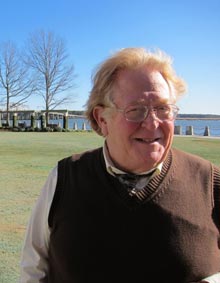 Does it include a second term as big challenges loom large in 2012?
 what stands out in retrospect?
 LW: USCB Chancellor Jane Upshaw has big plans for this arts campus, but she tells us a key aspect is keeping the neighbors happy – a dicey prospect in a historic district where change comes slowly or not at all. We’ve already seen concerns raised over proposed housing for just 16 students, and the eventual goal is 400.
 LW: The Center for the Arts has certainly begun to fulfill its potential as a cultural hub for the community. This February it’s the new home for the Beaufort International Film Festival, bringing BIFF back downtown and opening up all sorts of possibilities.
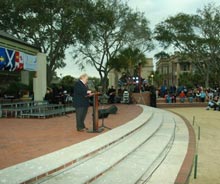 We didn’t get into the mess we got into in six months or a year. That’s just the reality. But there are signs. We’ve spent all this focus on trying to build a greater downtown for retail and service diversity. The demographics according to the Urban Land Institute indicate that the next wave of Boomers want smaller, simpler. They want to lock it. They don’t want a yard to mow. They’d be happy to go down to the park and throw a Frisbee. They want one car rather than two, two bicycles rather than none, to walk to dinner rather than drive. That demographic is hitting at a time when we’re getting ready for it. So, there are signs of recovery.
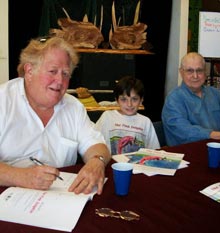 BK: I may not be objective, but I’d say in the last two years – and last year was the biggest year – there’s been much more civic engagement through volunteer activity, boards and commissions, the neighborhood improvement teams doing the clean-ups. We’ve worked to strengthen neighborhood associations as conduits to communicate about different projects because we need that structure. If you can’t communicate with everybody, at least you’ve got somebody in the neighborhood who can take it to another group. With the exception of Mossy Oaks, the five core neighborhoods all have pretty good, active organizations that meet once a month with police and fire, public works and our vendors. They go through priorities and issues, anything from crime to street sweeping schedules.
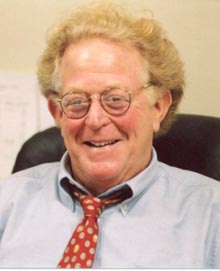 project planned – no budget, yet – for doing a demonstration in three neighborhoods to actually bury [the lines]. We’re not in litigation yet, but we might be in litigation with the low voltage providers who don’t like the idea. We propose that anytime SCE&G goes under ground the cables have to go with them. And the cables are fighting us on that. SCE&G has asked them to get off the poles.