
| Weedy, Seedy Types |
|
| Written by Laura Lee Rose |
| Tuesday, 04 September 2018 12:23 |
|
Weeds are usually spread by seeds or roots. Seeds are produced after a plant flowers and stored in pods, fruits or capsules. By design light-weight seeds can fly or float; stickers and burs literally spread by the “Velcro” principle as their tiny hooks hitchhike on the fur of animals and humans’ socks. Some cosmopolitan species reproduce by making a lot of seeds. Plantago spp., broad leaved and narrow leaved plantains, were brought by European setters to the new world. Native Americans called them “White Man’s Weed” as they appeared near cabins and forts, and quickly naturalized across Eastern North America. Plantain leaves were used by Europeans for its medicinal and antiseptic qualities. One plant may produce hundreds of seeds. Another weed that is noted for oodles of seeds is pigweed, Amaranthus spp. This annual weed has several species and has been grown for thousands of years for its leaves and grain. One plant can produce 100,000 small dark seeds. Annual weeds live one season, and biennial weeds live two seasons. Annuals can grow in summer Other weeds come up from the roots of a mother plant. Perennial weeds may be dormant in summer or winter and reappear from the crown or roots of last season’s plant. The root stores energy, in the form of carbohydrates during unfavorable conditions, and new stems and leaves begin to break ground when the weather, soil temperature, or amount of daylight is right. Examples of perennial lawn weeds are Bahia grass, common Bermuda, dollar weed, pigweed and nut sedge. These may be sprayed with a nonselective herbicide when actively growing. One thing that is helpful is identifying undesirable plants as seedlings. It is so much easier to pull or spray when they are tender. Again, it is very important to read the label and completely understand what weed you are trying to remove, when, how, and how much to use. Some products may need to be reapplied or used when no rain is forecast. Another control is digging, tilling, and mowing the offending weed until one of you gives up. For more information on weed control and ecology go to the Clemson University home and garden website. You may also visit the websites of the South Carolina Native Plant Society@ www.scnps.org and www.namethatplant.net. |
| Last Updated on Wednesday, 05 September 2018 04:57 |
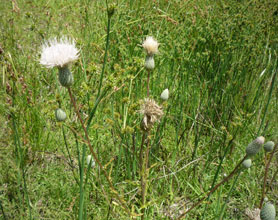 Weeds are very successful strategists. They have developed ways to grow in poor soil, low light and varying amounts of moisture. I respect any plant that comes up through the cracks in the sidewalk.
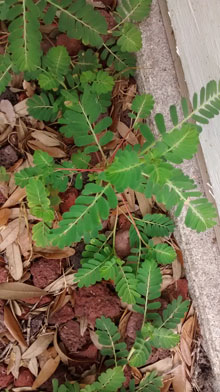 or winter. They have one thing in common; that is they must flower and produce seeds for the next season’s plant. The gardener’s strategy for preventing unwanted weeds (grasses and broadleaf) is to cultivate (pull or hoe) young plants, mow them - keeping them in vegetative rather than reproductive or flowering stage, and finally, apply a pre-emergent at the right time. Pre-emergent is commonly sold in combination with fertilizers for lawns and is called “Weed and Feed.” You wouldn’t want to use a weed and feed without reading the label to see what kind of weeds it prevents, or if you are planning to plant seeds (grass or otherwise). Southern lawns should be fertilized when they are actively growing; usually that is in April and August. Spring pre-emergent should be applied when the daffodils and forsythia are blooming – February to March. This is when the soils are warming up. To prevent winter annuals, Labor Day to October 15 is about right for the Lowcountry. There are pre-plant herbicides that are labeled for home gardens and orchards. One product that is being marketed as an organic pre-emergent, not toxic to fish or wildlife, is corn gluten. It is available at most garden centers and should be applied from September 1- October 15 to prevent winter weeds.