
| Fall Into The Lowcountry |
|
| Tuesday, 27 September 2011 13:16 |
|
The Backyard Tourist has a list of suggestions to help you make the most of the season.
Southerners have an inborn appreciation of the autumnal equinox. Those of us who can still recollect a time before the ubiquity of “conditioned air” appreciate the change of seasons even more. This is why some of us are good churchgoers: by the middle of July we are all aware of what Hell must be like. Fall means the end of summer’s stifling tyranny, a time when our primary occupation is staying cool and moving as little as possible. By the end of August we are practically motionless.
Then one morning the thick, murky haze is gone, replaced with a shade of blue unseen for what
Even the local wildlife notes the change. Our indigenous state bird, the mosquito (Vampirus Gigantus), and its close relative, known affectionately to locals as the “No See-um” (Gnatus Vampirus) migrate back to their ancestral breeding grounds in Hell. Once again people begin to emerge from hermetically sealed houses like survivors of the zombie apocalypse, safe again to go outside without fear of being drained dry like a cheap wine sack.
There is much to see and do in this Lowcountry fall. Let’s get to it.
Get in the Spirit
In historic Beaufort the Old Point is particularly lousy with ghosts, the most famous is the ironically named Monsieur Gauche, said to be the spirit of a 16th century Huguenot dwarf. Appropriately enough Gauche haunts the old home called The Castle and is known for tapping out coded messages and leaving red handprints on windows – gauche, indeed.
The privately owned Castle may be off limits, but you can still get intimate with the indigenous
And this season she’s joined forces with oral historians and well-known raconteurs from throughout the region to form Lowcountry Storytellers. Evelene says the idea is pretty simple, “Sit around campfires or lowcountry porches and pass down the heritage of the art of telling and listening to the stories that we love to remember.” Call The Spirit of Old Beaufort for all the details at 843-525-0459.
For the past 19 years The Exchange Club of Beaufort has been raising money for the Child Abuse Prevention Association with its Ghost Tours. According to a club source, “ghostly visions have been known to appear on past tours,” which take place both by carriage and on foot. These tours begin October 14th and run through the 30th and tend to fill up fast. Call 843-524-4678 for reservations.
Back to Nature
There are plenty of less terrifying ways to get out and enjoy autumn in the Lowcountry. In downtown Beaufort most of the tours are headquartered in or near the City Marina at Bay and Charles Streets. Climb aboard one of the famous horse-drawn Southurn Rose Buggies (www.southurnrose.com) for a leisurely carriage ride while your driver guides you through time and history.
Find out what this three hundred year old river
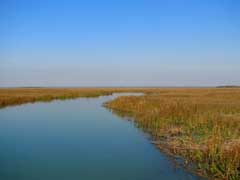
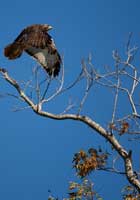
If you prefer to get out on the water under your own power Kim and David at Beaufort Kayak Tours (www.beaufortkayaktours.com) offer options for both experienced and novice paddlers alike. Both are certified Master Naturalists and City of Beaufort History Tour Guides. “This time of year we really emphasize the ACE basin tour,” says David. ACE is the acronym for the estuarine system created by the Ashepoo, Combahee and Edisto Rivers. Float among giant cypress trees through the remnants of ancient rice plantations while snowy egrets, herons and ibis stalk the tall grasses and bald eagles circle overhead. BKT offers both a two-hour and four-hour ACE paddle, the latter covers 9 miles of unspoiled Lowcountry wetlands. Here the true fall colors of the region come together: crystalline blue skies and golden grasses mirrored on smooth black water. Get all the details at 843-525-0810.
It’s possible to experience the Lowcountry from a saddle, too. In fact, there is simply not a more
There’s no easier or more popular access to some of the most amazing scenery in the Lowcountry
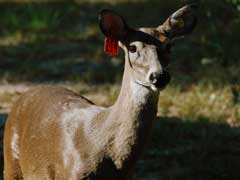
The park also features a marsh boardwalk, education center and a fishing pier stretching more than a thousand feet into the center of Fripp Inlet. But according to Park Manager Jeff Atkins the park has a largely undiscovered treasure. “Our trail system is top-notch,” he says. “It’s a real unique experience to go and disappear in the woods right on the beach.” Wildlife is also abundant and most of it – the park’s deer in particular – isn’t the least bit shy.
Half a mile west of Hilton Head Island just off Highway 278 between the bridges is lesser-known natural jewel. The Pinckney Island National Wildlife Refuge is actually a 4000 acre clutch of smaller islands, Pinckney being the largest. The property was once the plantation of Major General Charles Cotesworth Pinckney, a prominent political figure in early 19th century South Carolina politics. Little evidence remains of Pinckney’s wealth, influence or his stately home. Like hundreds of other antebellum Lowcountry baronies, time and nature have reclaimed these things. Almost 70 percent of the refuge is marsh and tidal creek with large concentrations of ibis, herons, and egrets. Whitetail deer roam fallow fields and dolphins are common sights in the creeks and inlets. Some of the refuge’s freshwater ponds are among the top birding spots in the coastal southeast. On the very cusp of the urban chaos that sprawls from Hilton Head, Pinckney Island NWR is a serene natural wonder by land or by water. Under management of the U.S. Fish and Wildlife Service, information on the refuge is characteristically scarce.
Burnt offerings
The Chapel of Ease on St. Helena Island was built by wealthy colonial planters in the 1740’s. Such “chapels of ease” were common in remote areas where a trip to town might take days. The church was constructed out of native brick and tabby, a kind of indigenous concrete first favored by the Spanish made with oyster shells and sand. The chapel survived both the American Revolution and the Civil War only to burn in a forest fire in 1886. It was never rebuilt. The ruins are easy to spot just a few miles from the heart of Frogmore on the left past the Penn Center.
The Old Sheldon Church, formerly known as the Prince William Parish Church, is a stoic testament in brick and mortar to the two most tumultuous periods in American history. It was bankrolled and organized by the wealthy and influential landowner, William Bull. His Newberry Plantation was a convenient carriage ride to the columned sanctuary’s first service in 1757. A little more than a decade later it burned in the fires of the American Revolution. Sheldon was rebuilt by 1826 only to burn again less than a half-century later, once more a victim of our nation’s struggles. In January of 1865, troops under the command of General William Tecumseh Sherman set the church ablaze. Once again the walls refused to fall, but the church was never rebuilt. It stands now as it stood then: an elegant, ruined reminder of the price paid first for democracy and then for freedom.
From Beaufort take US 21 North, bear left at the intersection of US 17 at Gardens Corner. Sheldon Church Road is the first right and the ruins are well marked just two miles down this scenic byway.
Taste The Lowcountry
A few blocks away is the Mecca of a once thriving Lowcountry oyster industry. Larry and Tina
It’s fall and once again we’ve barely scratched the surface. More research is obviously needed. For instance, it is widely rumored that oysters pair well with beer. I will endeavor to look into this and get back to you. Bon appetite.
Mark Shaffer’s email is backyardtourist@gmail. |

 (Editor's Note: This is an update of an article originally published 10/27/10)
 seems an eternity. The sun is a little brighter, everything appears somehow clearer. The beached armadas of summer partiers dwindle on the rivers’ sandbars, thinned by a slight nip in the air and a corresponding plunge in water temperature. The scent of the marsh at low tide is clean and heady as the vivid green begins to gradually drain from the savannahs of spartina grass. Each gust of breeze brings with it a shower of leaves and talk turns to football and weekend oyster roasts.
 Since the Halloween season is upon us we’re naturally predisposed to the supernatural and the Lowcountry is loaded with enough specters to open a Ghostbusters franchise. One of the best known is the Land’s End Light, famous for spooking locals and tourists alike for decades and maybe even luring some to their ultimate reward. From downtown Beaufort take highway 21 out to St. Helena Island, hang a right on Dr. Martin Luther King Road in the heart of Frogmore, drive a few miles past the Penn Center. When road turns long and straight, pull over and wait if you dare for a glowing phantasm that seems to move about a dozen feet above the road. Some say it’s the spirit of a decapitated confederate soldier searching for his head. Others believe the light is the ghost of a slave separated from his family and literally sold down the river. Be warned, should the light shine in your direction think twice before giving chase. At least two people have followed the light to their doom.
 undead (or at least their stories) through The Spirit of Old Beaufort (www.thespiritofoldbeaufort.com). Evelene Stevenson has guided tours through the eerie moss-shrouded streets and alleys for more than a decade and a half. Although she hasn’t actually come face-to-face with any spirits she says, “I have seen some really scary live people.” Her “Whispers From the Grave Lantern Tour” tour is a half-mile, 90-minute walk by lamplight through the centuries with Evelene leading the way in period costume.
 town looks like from the water aboard Captain Dick’s 30 passenger Prince of Tides. Large pods of bottle-nosed dolphin are not unusual and sometimes come right up to the boat (remember, no feeding). The cruise runs right past some of the town’s harder to see old homes, including Tidalholm where both The Big Chill and The Great Santini were filmed. Be sure to pack a camera and binoculars if you have them. Snacks and beverages are available for purchase on board. Call ahead to 843-524-4422 for tour times and reservations.
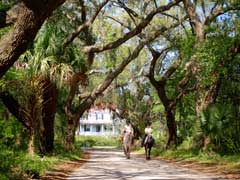 congenial spot for horsing around than Camelot Farms Equestrian Center (www.camelotfarmshorses.com). Owners Anne and Mark Kennedy specialize in breeding the rare Rocky Mountain Horse. Their 60 acre spread on St. Helena Island is home to the Rocky Mountain Horse Association’s 3 Year Old Champion, Camelot’s Cocoa Confection. Camelot offers all the usual horse-related services as a well as a ride back in time down the canopied Avenue of the Oaks past Coffin Point Plantation. The two-hour ride eventually winds around to a thin slip of beach on Saint Helena Sound with a view of Harbor Island. Finding Camelot can be appropriately tricky the first time out. Best to call for directions and availability at 843-838-3938.
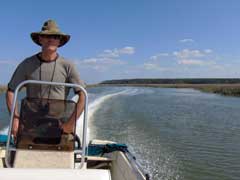 While a good camera is a must for all of these tours, it is an absolute essential if you’re booking time with one of the region’s most acclaimed wildlife photographers. Eric Horan’s work has appeared in Time, Newsweek and The New York Times as well as the prestigious cover of the Smithsonian – oh, and a little publication we like to call The Lowcountry Weekly. With two decades of experience capturing the unique natural world of the Lowcountry there are few better qualified to lead a photo safari. Horan’s also a Master Naturalist with an intimate knowledge of the area’s rivers, marshes, inlets, creeks and islands. He also tailors each outing to suit both the season and the shooters. This time of year he focuses on capturing the spectacular clash of colors through the waterways, marshes and Sea Islands. This is also a prime time to photograph dolphins, deer and tremendous flocks of migratory waterfowl. I’ve been out with the man and count myself fortunate to have had the experience, but don’t take my word for it. Get proof at www.horanphoto.com or call 843-524-3037 for the particulars.
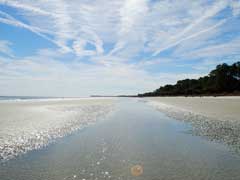 than Hunting Island State Park. Just 16 miles from downtown Beaufort, more than a million visitors flock to the park’s famous beach each year. The good news is that most of them come intake-the-fall-beach the summer, leaving the pristine beach mostly to the locals this time of year. Among the many things that make Hunting Island such a special place is the opportunity to actually witness the endless clash of sea and land. Just a few steps from the lighthouse the maritime forest literally falls into the Atlantic Ocean littering the beach with “bones” of oak, pine and palmetto felled by the ceaseless gnawing of the sea. This part of the beach is impassable, even dangerous during high tide, but a sunrise at low tide with the right weather is nothing short of awe-inspiring and not to be missed by anyone with a camera. An extra $2 to climb to the top of the lighthouse is highly recommended. On a clear day the perspective is always astounding, even to those most used to seeing it.
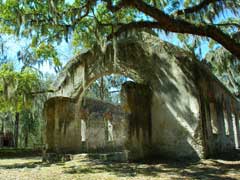 The Lowcountry is known for it’s historic churches. Old Beaufort is home to an impressive collection most within a short walk of one another. Their steeples pierce the live oak canopy and voices of the faithful have been raised in a few of them since Moses was a lad, or so it seems. But two of the most photographed are far from any town center, ruined reminders of both a vanished culture and the struggles of a nation.
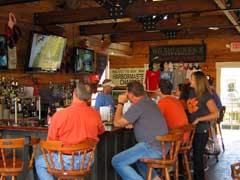
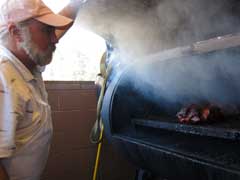 Apart from all the history and nature there is one perfect way to get the flavor of the Lowcountry and that quite simply is to take a bite of it. This is oyster season and that means the tasty mollusks will be featured in bars, restaurants and backyard roasts until the months run out of “R’s.” In downtown Beaufort, Plum’s raw bar opens up to Bay Street. South of the Broad River in Bluffton’s new Promenade, we like the upstairs bar at Captain Woody’s. This is the one place where you won’t feel guilty about watching football in gorgeous fall weather. The bar opens up to an expansive deck where you can keep an eye on the game and enjoy some fresh oysters, fried or on the half, under blue skies. Beware, though. The deck overlooks Ted Huffman’s Bluffton BBQ and the scent of his wood fired, slow cooked pork may lure you away – and keep you.
 Toomer’s Blufton Oyster Company picks and processes every oyster by hand right out of the May River. This living piece of history was recently cited by South Carolina Department of Commerce as one of the top 10 oldest and still prosperous companies in South Carolina. The operation runs it’s own boats and features local seasonal fish, shrimp and shellfish. Place an order or just ask what’s fresh at 843-757-4010.